Research Publication
Mapping Myself
Body as Map.
An exploration of movement, memory and place through choreographic practice.
Opening
Mapping Myself began with a simple question:
Can the body become a map?
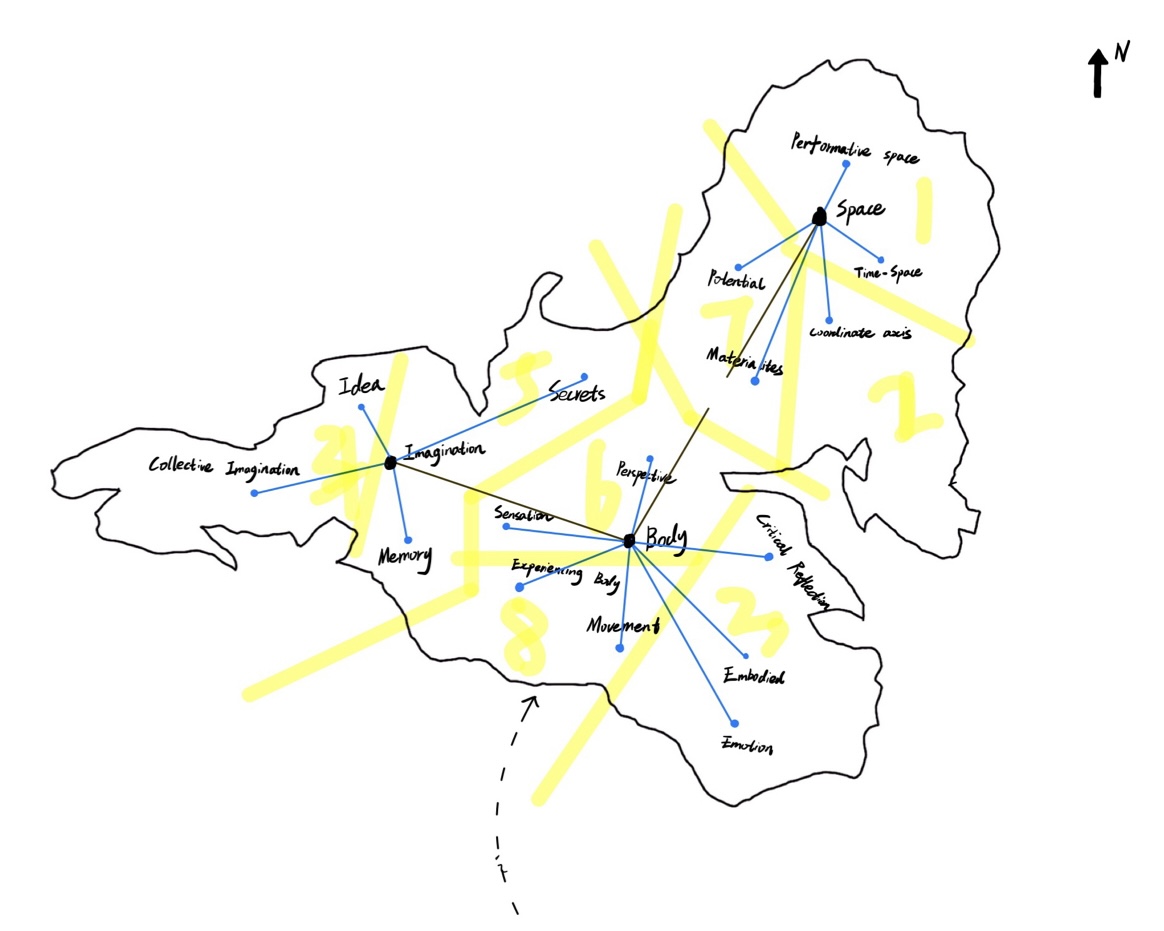
Rather than treating choreography as the production of movement, I became interested in choreography as a way of organising relationships between memory, place and perception.
Instead of making dances about locations, I started treating locations as choreographic material. Maps, fragments, drawings and personal memories gradually became tools for thinking through movement rather than illustrating it.
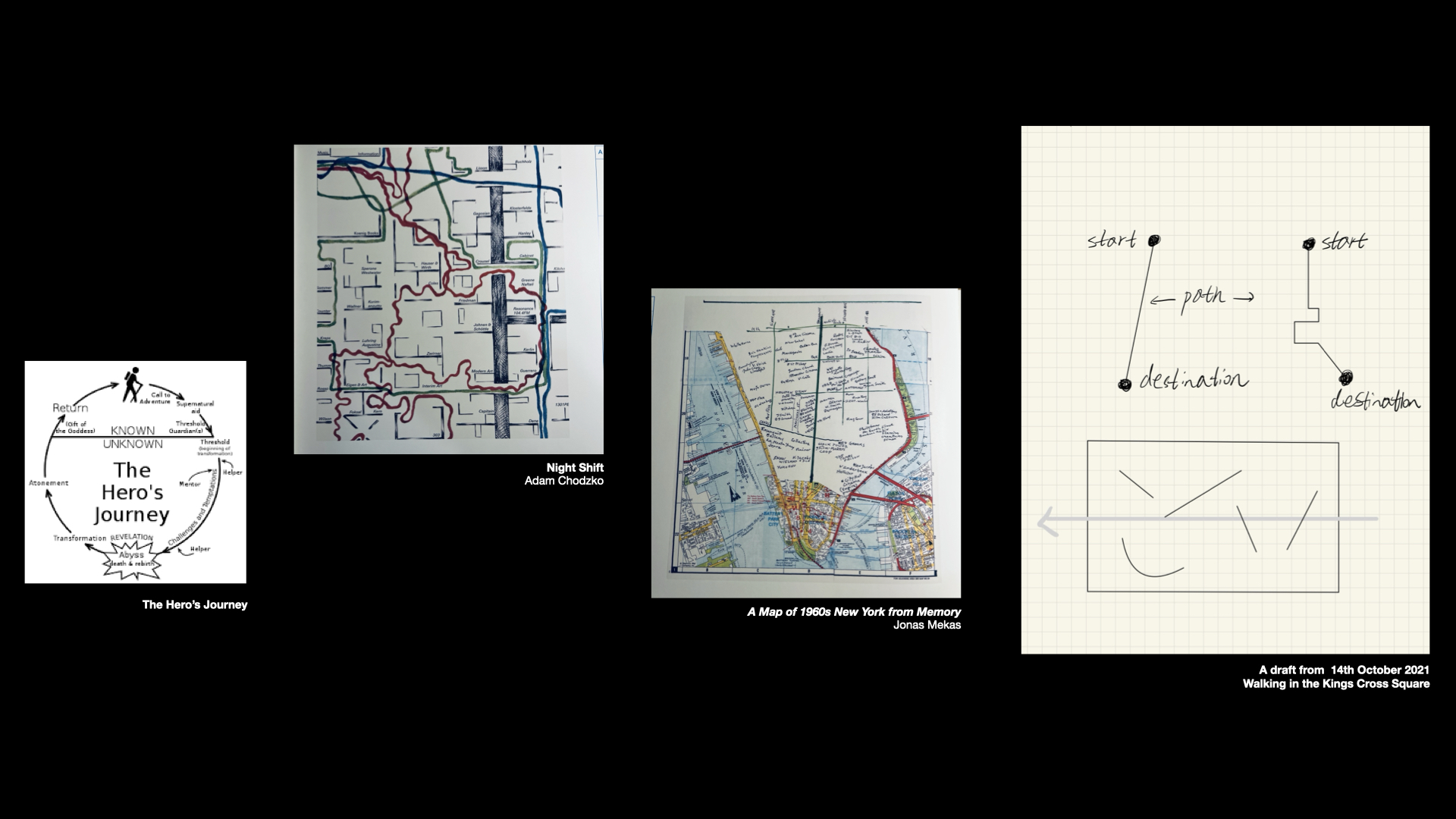
Map / Memory / Place
The question was never only how to represent a place. It was how a place continues to organise the body after it has been remembered, walked through or left behind.
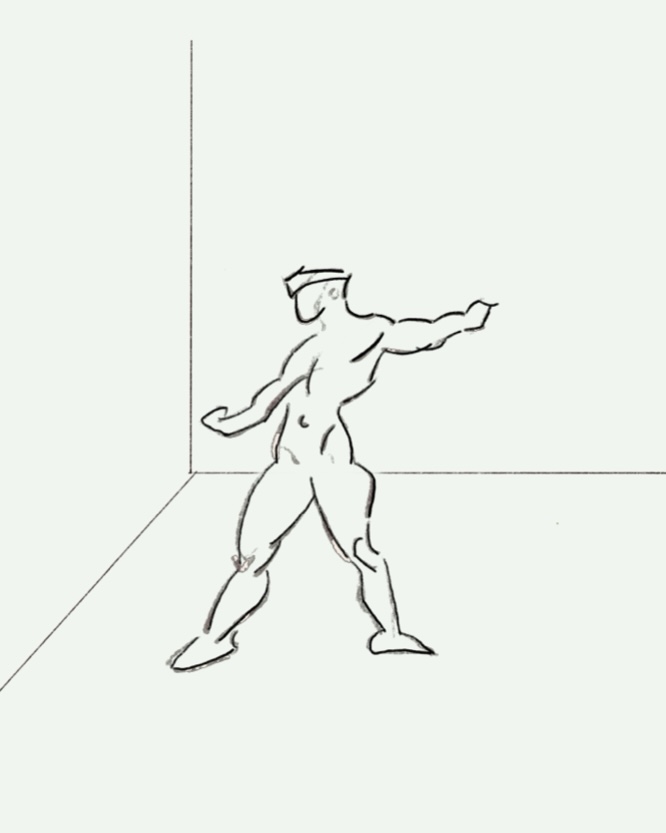
Drawing became a choreographic practice. Maps were no longer representations of places but systems for organising attention, relationships and movement.
Sketches, diagrams and written notes gradually shifted from recording ideas to generating them. Thinking itself became a physical process.
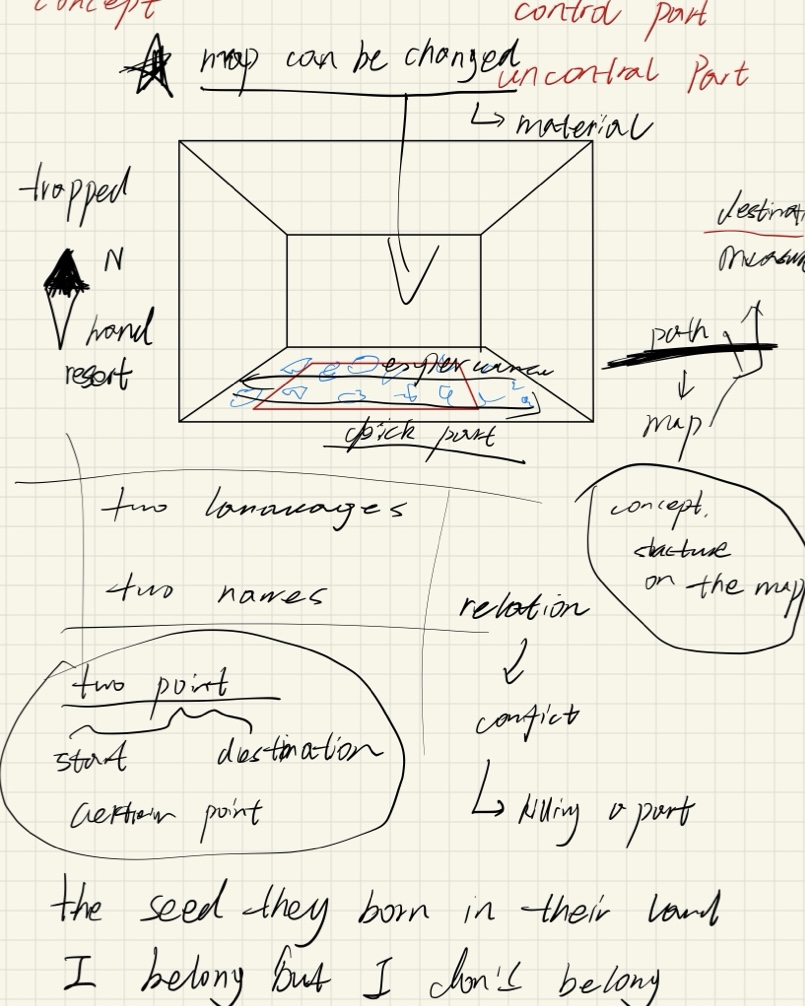
Tasks
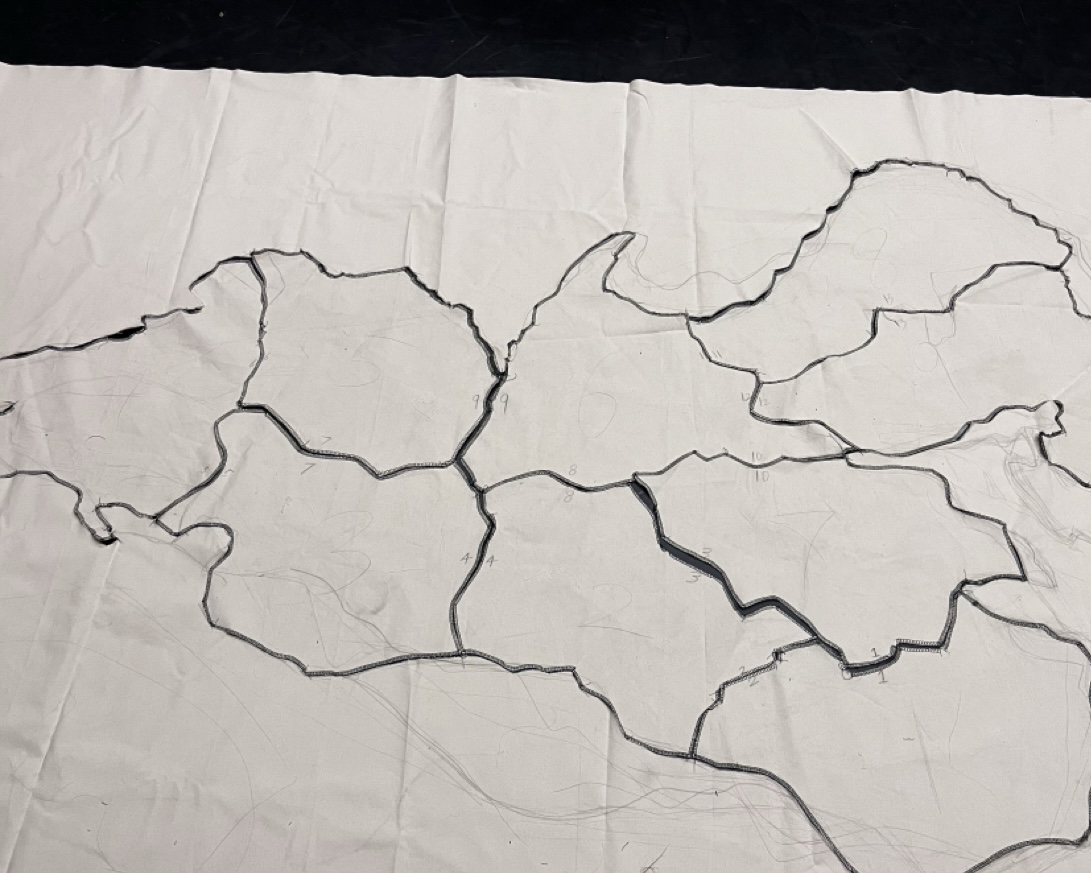
The process developed through tasks that later became reusable research protocols: Unvisitable Map, Visible Map, On / Off the Map, Nine Fragments, Carry / Drop / Find and Nine Words.
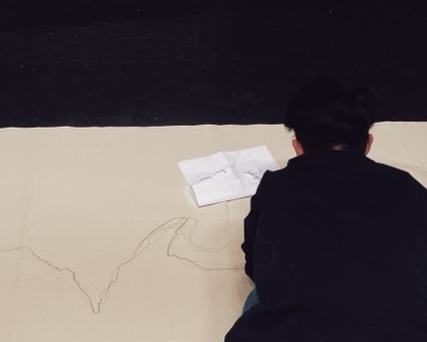
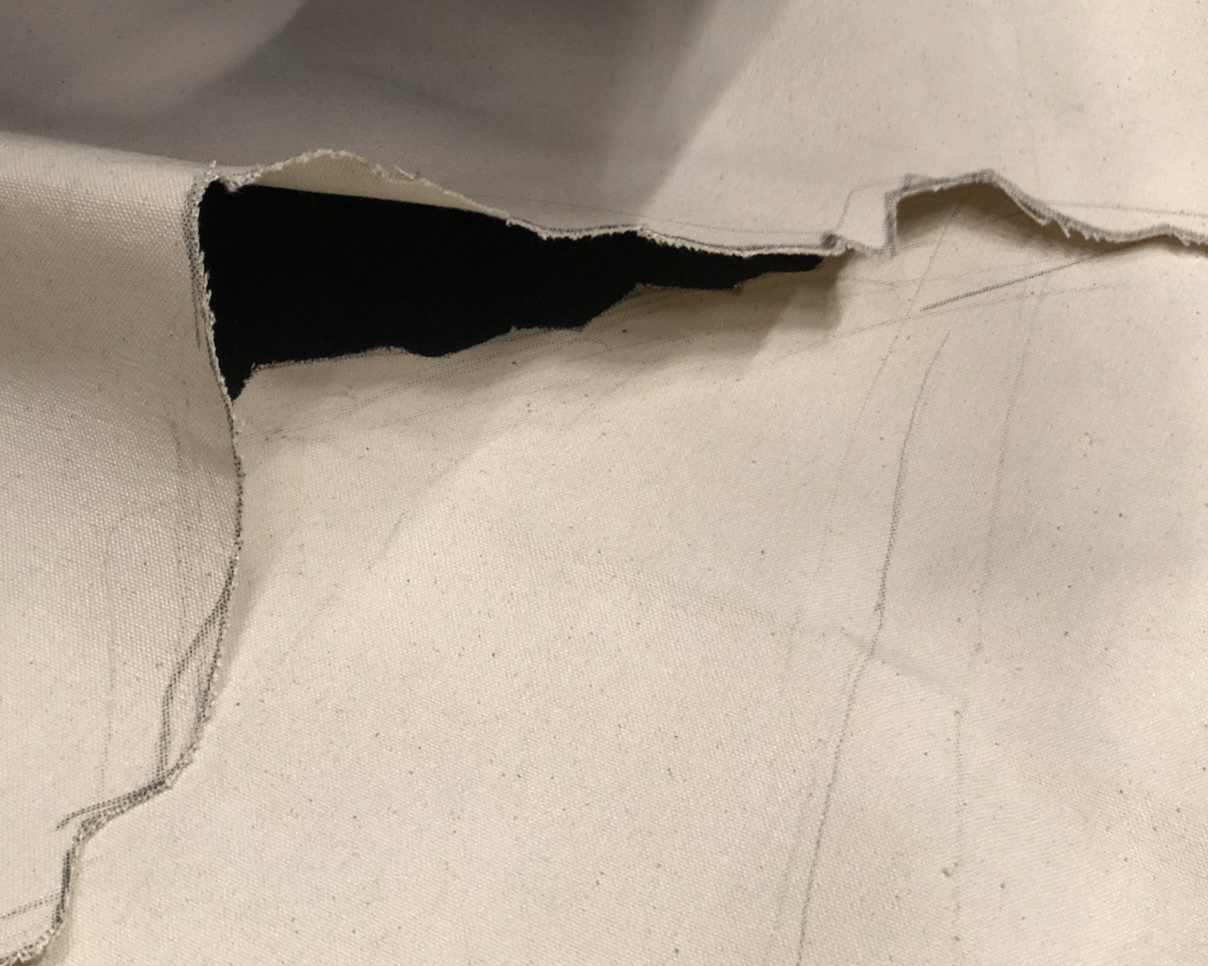
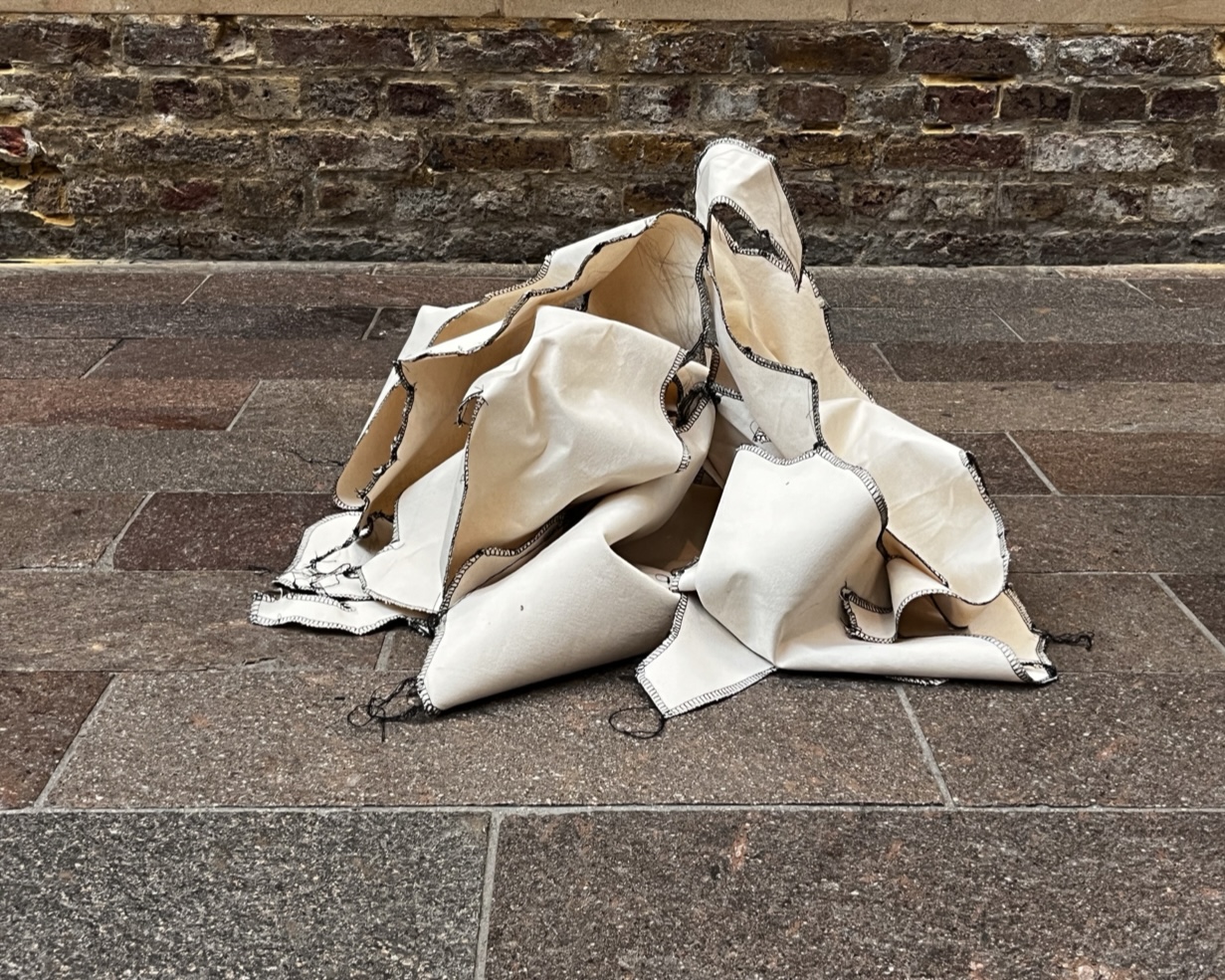
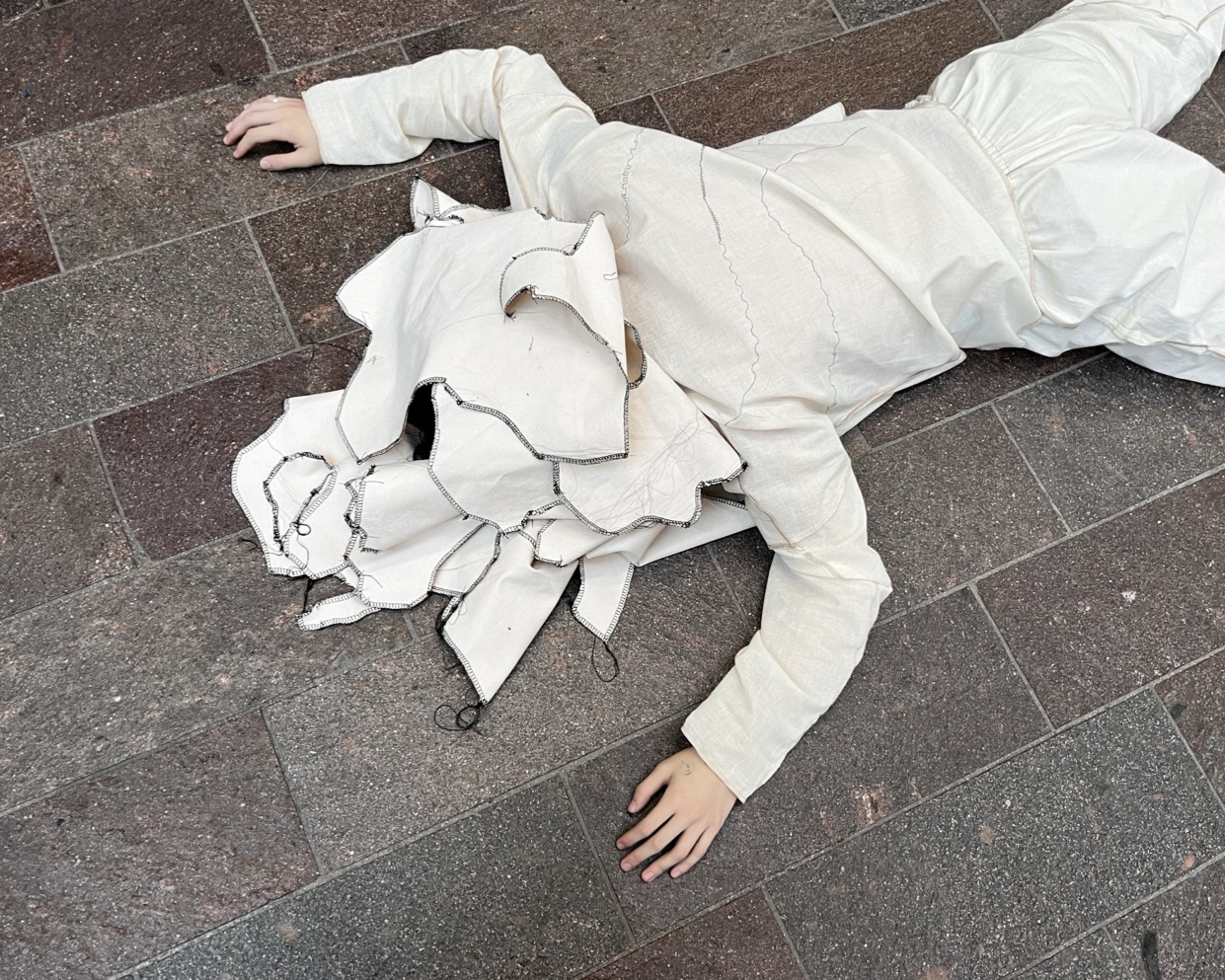
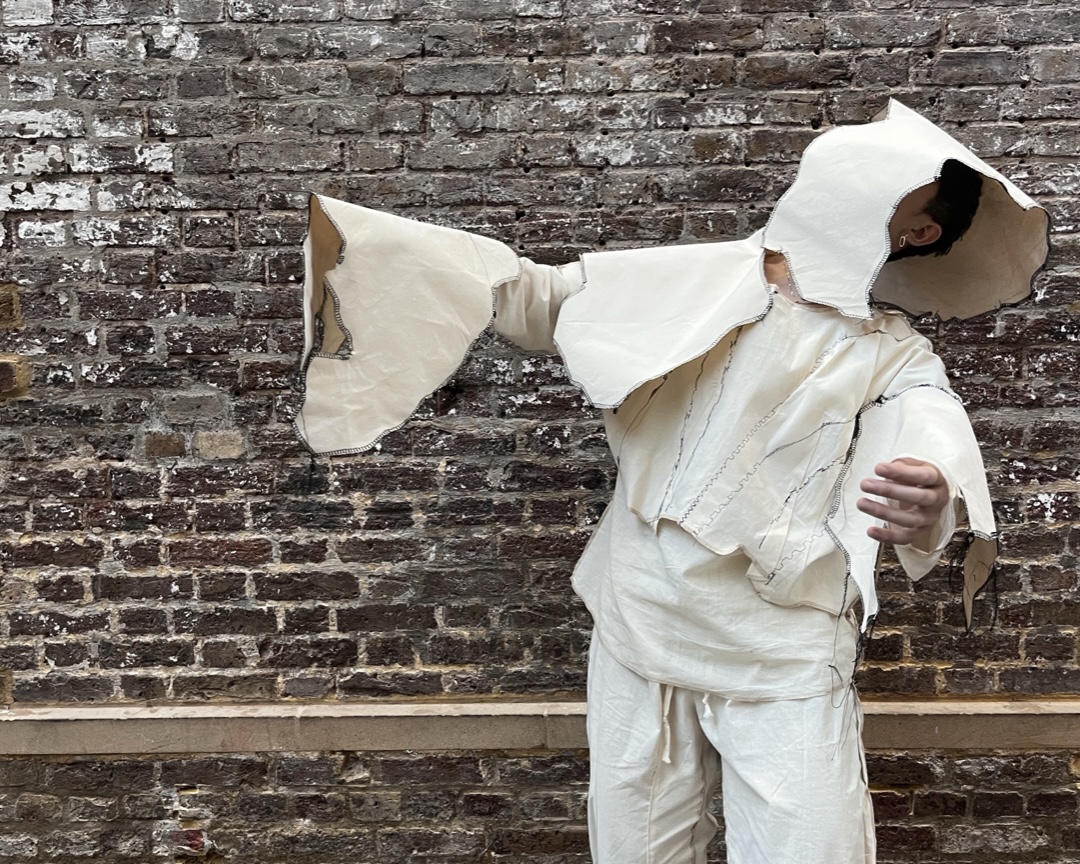
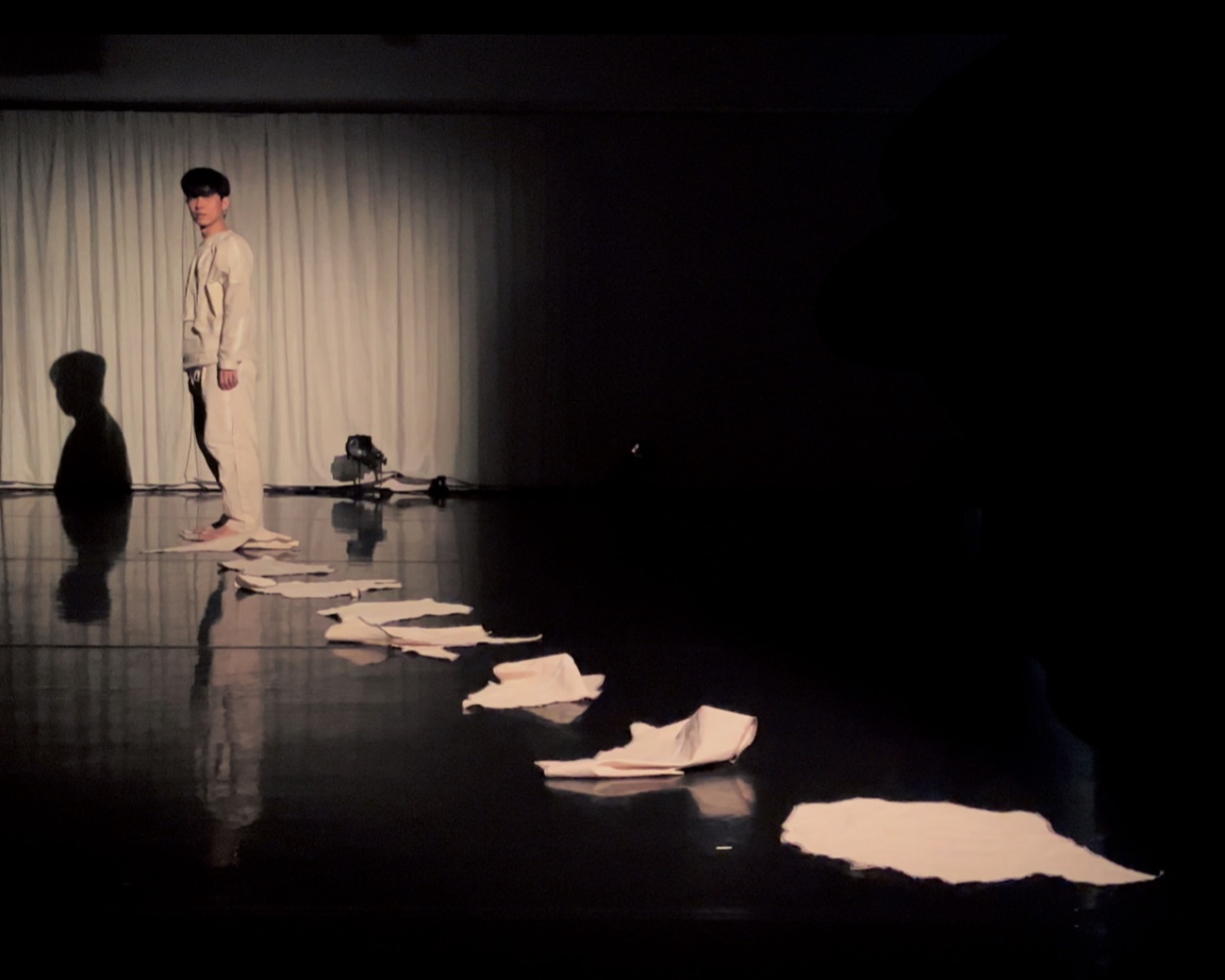
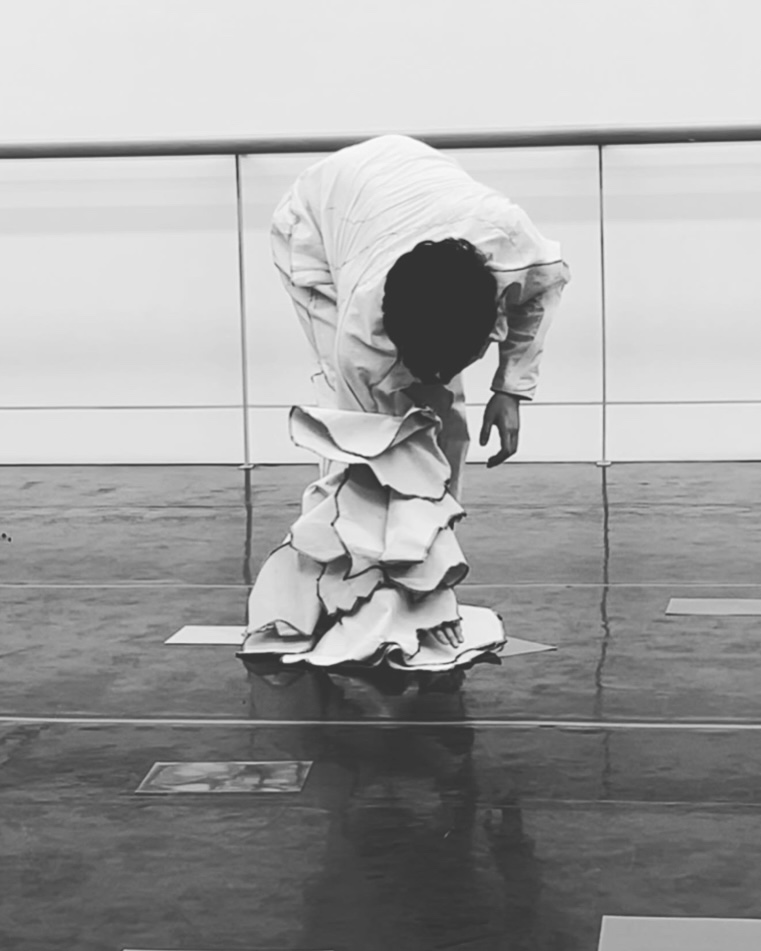
Ideas were repeatedly translated into materials. Paper was folded, cut, rearranged and rebuilt. Fabric was treated as a moving map rather than a costume.
Objects were not used as props but as thinking devices that could reshape bodily decisions and spatial relationships. Making became another way of researching.
Performance
Performance was never intended as the final outcome. It functioned as a temporary state in which drawings, materials and choreographic tasks became embodied.
The performance did not conclude the research. It simply revealed one possible form the research could take at that moment.
The body did not stand outside the map. It became one of its coordinates.
Afterwards
Looking back, I no longer see Mapping Myself as an early choreography project.
I see it as the moment I began understanding research as practice.
Many of the questions that first appeared here continue to return in later projects, particularly Revisiting Movement.
The tools have changed. The questions have remained remarkably similar.