Organising Principles
Supporting Leg
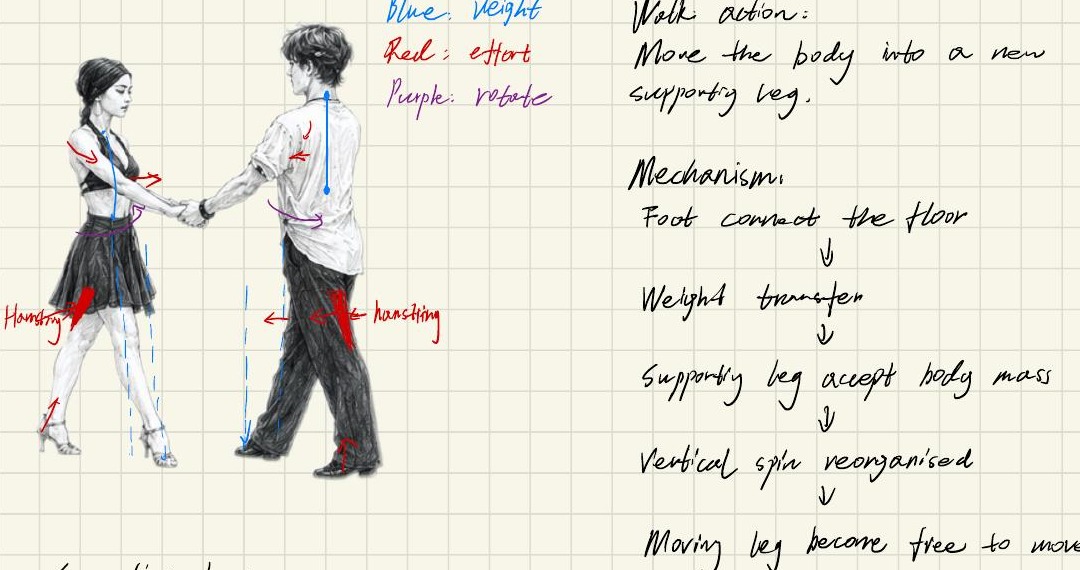
The moving leg does not begin the movement. The supporting leg does.
Attention is often drawn towards the leg that travels. Yet movement begins somewhere else.
Before a leg can become free, body mass must be received. Contact with the ground produces pressure. Pressure allows weight to commit. The supporting leg accepts this weight and reorganises the body above it.
The pelvis responds first. The spine reorganises through the change of support. The rib cage and upper body follow. Only then can the other leg move without carrying the body's unresolved weight.
The supporting leg is therefore not a static base. It is an active site of bodily reorganisation.
- GROUND
- CONTACT
- PRESSURE
- WEIGHT COMMITS
- SUPPORTING LEG ACCEPTS
- PELVIS REORGANISES
- SPINE RESPONDS
- MOVING LEG BECOMES FREE
Principle
The supporting leg does not only support weight. It reorganises the entire body.
Movement Reading
Intention
Prepare the body to travel.
Organisation
The supporting leg receives body mass and reorganises the pelvis, spine and upper body.
Embodied Experience
Pressure increases. Weight becomes clear. The free leg becomes lighter.
Perception
Grounded, continuous and apparently effortless.
Research Question
When does a leg become a supporting leg?